

Are There Any Vitamins In Estee Lauders Advanced Night Repair?
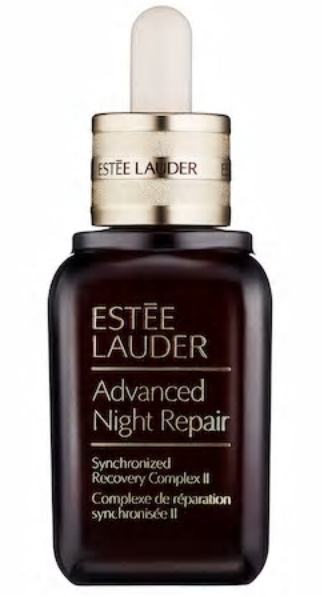
Advanced Night Repair Synchronized Recovery Complex Ii
A powerful night renewal serum for radiant, youthful-looking skin; with instant luminosity and hydration.
Uploaded by: msdollie on
Ingredients overview
H2o\Aqua\Eau, Bifida Ferment Lysate, Methyl Gluceth-20, Peg-75, Bis-Peg-18 Methyl Ether Dimethyl Silane, Butylene Glycol, Propanediol, Cola Acuminata (Kola) Seed Extract, Hydrolyzed Algin, Pantethine, Caffeine, Lecithin, Tripeptide-32, Ethylhexylglycerin, Sodium Rna, Bisabolol, Glycereth-26, Squalane, Sodium Hyaluronate, Oleth-3 Phosphate, Caprylyl Glycol, Lactobacillus Ferment, Oleth-iii, Oleth-5, Anthemis Nobilis (Chamomile), Yeast Excerpt\Faex\Extrait De Levure, Choleth-24, Hydrogenated Lecithin, Ceteth-24, Tocopheryl Acetate, Ethylhexyl Methoxycinnamate, Hexylene Glycol, Carbomer, Triethanolamine, Trisodium Edta, Bht, Xanthan Gum, Phenoxyethanol, Blood-red iv (Ci 14700), Yellow 5 (Ci 19140)
Highlights
Key Ingredients
Other Ingredients
Skim through
| Ingredient name | what-it-does | irr., com. | ID-Rating |
|---|---|---|---|
| H2o\Aqua\Eau | solvent | ||
| Bifida Ferment Lysate | goodie | ||
| Methyl Gluceth-20 | moisturizer/humectant | goodie | |
| Peg-75 | moisturizer/humectant, solvent | ||
| Bis-Peg-18 Methyl Ether Dimethyl Silane | emollient, moisturizer/humectant, surfactant/cleansing | ||
| Butylene Glycol | moisturizer/humectant, solvent, viscosity controlling | 0, one | |
| Propanediol | solvent, moisturizer/humectant | ||
| Cola Acuminata (Kola) Seed Excerpt | |||
| Hydrolyzed Algin | |||
| Pantethine | emollient | ||
| Caffeine | antioxidant, perfuming | goodie | |
| Lecithin | emollient, emulsifying | goodie | |
| Tripeptide-32 | |||
| Ethylhexylglycerin | preservative | ||
| Sodium Rna | |||
| Bisabolol | soothing | goodie | |
| Glycereth-26 | moisturizer/humectant, emollient, viscosity controlling | 0, 0 | |
| Squalane | skin-identical ingredient, emollient | 0, 1 | goodie |
| Sodium Hyaluronate | peel-identical ingredient, moisturizer/humectant | 0, 0 | goodie |
| Oleth-three Phosphate | surfactant/cleansing, emulsifying | two, 2 | |
| Caprylyl Glycol | moisturizer/humectant, emollient | ||
| Lactobacillus Ferment | soothing, preservative | goodie | |
| Oleth-3 | emulsifying | two, 5 | |
| Oleth-5 | emulsifying | two, 3 | |
| Anthemis Nobilis (Chamomile) | soothing, perfuming | goodie | |
| Yeast Excerpt\Faex\Extrait De Levure | moisturizer/humectant | goodie | |
| Choleth-24 | emulsifying, surfactant/cleansing | 0, 0 | |
| Hydrogenated Lecithin | emollient, emulsifying | goodie | |
| Ceteth-24 | surfactant/cleansing, emulsifying, surfactant/cleansing | ||
| Tocopheryl Acetate | antioxidant | 0, 0 | |
| Ethylhexyl Methoxycinnamate | sunscreen | 0, 0 | |
| Hexylene Glycol | solvent, emulsifying, perfuming, surfactant/cleansing | 0-1, 0-2 | |
| Carbomer | viscosity controlling | 0, 1 | |
| Triethanolamine | buffering | 0, 2 | |
| Trisodium Edta | chelating | ||
| Bht | antioxidant, preservative | ||
| Xanthan Gum | viscosity controlling | ||
| Phenoxyethanol | preservative | ||
| Red 4 (Ci 14700) | colorant | ||
| Yellow v (Ci 19140) | colorant |
Estée Lauder Advanced Night Repair Synchronized Recovery Complex Two
Ingredients explainedAlso-called: Aqua;Water | What-information technology-does: solvent
Good old water, aka H2O. The virtually common skincare ingredient of all. Yous tin can usually find it right in the very first spot of the ingredient list, meaning information technology'southward the biggest thing out of all the stuff that makes up the product.
Information technology's mainly a solvent for ingredients that do not like to dissolve in oils only rather in water.
Once inside the pare, it hydrates, but not from the outside - putting pure h2o on the peel (howdy long baths!) is drying.
I more than thing: the water used in cosmetics is purified and deionized (it ways that nigh all of the mineral ions inside it is removed). Like this, the products can stay more stable over time.
Bifida Ferment Lysate is a probiotic ingredient that's used in one of the most iconic serums in the world, the Estee Lauder Advanced Night Repair. Based on manufacturer info information technology potently protects against UV-induced damage in the skin and helps with Dna repair. An Estee Lauder patent from 2009 also talks near Deoxyribonucleic acid repair action.
As far as published enquiry goes we could find one promising i. It showed that applying x% bacterial extract to sensitive, reactive skin helped with better bulwark function and decreased skin sensitivity.
Overall, it is definitely a promising ingredient, even for sensitive skin types but not the virtually proven i (yet).
A corn carbohydrate derived, h2o-soluble, pale xanthous syrup, that nicelymoisturizes the skin.It has alight and smoothen skin experience, it is non-tacky, and it can improve the afterwards-experience of the formula. It is also mild and gentle, popular in sensitive skin formulas.
A petty helper ingredient that gives the formula a good skid and helps to solubilize other ingredients. Itbesides has binding, softening and moisturizing properties. Comes in the form of h2o-soluble white powder.
Bis-PEG-18 Methyl Ether Dimethyl Silane is a silicone that is h2o dispersible (as opposed to most other silicones that are unremarkably oil dispersible). It makes the skin smoothen and nice (emollient), moisturizes, helps to reduce tackiness, and also has some foam boosting properties. It is frequently used in calorie-free, watery formulas to give them an extra silky feel.
Butylene glycol, or permit's just call it BG, is a multi-tasking colorless, syrupy liquid. It's a great option for creating a nice feeling product.
BG's principal job is usually to be a solvent for the other ingredients. Other tasks include helping the product to absorb faster and deeper into the skin (penetration enhancer), making the product spread nicely over the pare (sideslip agent), and attracting water (humectant) into the skin.
It's an ingredient whose condom hasn't been questioned so far by anyone (at least not that we know about). BG is canonical by Ecocert and is also used enthusiastically in natural products. BTW, it's also a food additive.
Propanediol is a natural alternative for the often used and often bad-mouthed propylene glycol. It's produced sustainably from corn sugar and it's Ecocert approved.
Information technology's quite a multi-tasker: tin can be used to improve skin moisturization, equally a solvent, to heave preservative efficacy or to influence the sensory properties of the cease formula.
 We don't accept description for this ingredient withal.
We don't have clarification for this ingredient yet.
We don't have description for this ingredient yet.
Hello, our favorite molecule that helps us wake upwards in the morning time and so keeps u.s. going through the day. As a super well-known stimulant from java, tea and plenty of other soft drinks, Caffeine needs no introduction. So we will skip correct to the part where we talk about what the hell it does in then-so many cosmetic products.
Looking at the research, we were surprised to find how versatile Caffeine is. It is a small, h2o-loving molecule with pretty good skin penetration abilties. Once in the peel, it has overnice antioxidant backdrop, meaning that information technology reduces the formation of evil gratuitous radicals and information technology might even exist useful in preventing UV-induced skin cancers.
A well-known thing about Caffeine is that it improves the microcirculation of the blood vessels. Though conventional wisdom and anecdotal bear witness says that this property is helpful for dark under-heart circles and puffy eyes, we have to mention that the double-blind research we have institute most a three% caffeine gel concluded that "the overall efficacy of the selected caffeine gel in reducing puffy optics was not significantly different from that of its gel base." Simply you lot know, the proof is in the pudding.
Another thing Caffeine is used for in body care products is its anti-cellulite effects. In theory, information technology can speed upwardly the lipolysis process (the "fat burning" by our cells) and stimulate the draining lymph organisation that might pb to the improvement of cellulite. But here again, the prove that information technology actually makes a measurable, let alone visible, comeback on bodily human being beings is express (nosotros could find only some animate being skin studies or caffeine existence combined with other actives).
Last, just non least, we take to write virtually caffeine and hair growth. The theory is that information technology can inhibit the activity of the v-α-reductase enzyme that plays an important function in hair loss and allows a renewed growth phase of the hair. We accept constitute some recent and promising research to dorsum this upward. A 2022 report compared a 0.2% caffeine liquid with a 5% Minoxidil (an FDA approved active to treat baldness) solution and found that "a caffeine-based topical liquid should be considered as not inferior to minoxidil five% solution in men with androgenetic alopecia", or English translation means that the caffeine liquid was pretty much every bit good as the FDA-approved Minoxidil stuff. Keen!
Overall, we think that caffeine is a very versatile and biologically active ingredient. Even though some of its effects are more hyped upwardly than backed up, it is notwithstanding a nice to have on many ingredient lists.
A very mutual ingredient that can be constitute in all cell membranes. In cosmetics it's quite the multi-tasker: it'south an emollient and water-binding ingredient but it's also an emulsifier and tin be used for stabilization purposes. It's also oft used to create liposomes.
We don't accept description for this ingredient yet.
If you have spotted ethylhexylglycerin on the ingredient list, near probably yous will encounter there likewise the current It-preservative, phenoxyethanol. They are skilful friends because ethylhexylglycerin tin can boost the effectiveness of phenoxyethanol (and other preservatives) and equally an added bonus it feels prissy on the peel besides.
Also, it'due south an effective deodorant and a medium spreadingemollient.
We don't have description for this ingredient yet.
Likewise-chosen: Alpha-Bisabolol | What-information technology-does: soothing
It'south one of the active parts of Chamomile that contains well-nigh 30% of bisabolol. It's a clear oily fluid that is used in skincare every bit a nice anti-inflammatory and soothing ingredient.
It's a nice glycerin-based humectant and emollient that gives peel a smooth and luxurious feel.
It seems to us that squalane is in mode and in that location is a reason for it. Chemically speaking, it is a saturated (no double bonds) hydrocarbon (a molecule consisting only of carbon and hydrogen), meaning that it's a prissy and stable oily liquid with a long shelf life.
It occurs naturally in sure fish and plant oils (e.k. olive), and in the sebum (the oily stuff our skin produces) of the human skin. Equally f.c. puts it in his awesome blog post, squalane's master things are "emolliency , surface occlusion, and TEWL prevention all with farthermost cosmetic elegance". In other words, it'south a superb moisturizer that makes your skin dainty and smooth, without beingness heavy or greasy.
Another advantage of squalane is that information technology is pretty much uniform with all skin types and skin conditions. Information technology is fantabulous for acne-prone skin and safety to use even if you lot accept fungi-related pare problems, like seborrhea or fungal acne.
The unsaturated (with double bonds) and hence less stable version of Squalane is Squaldue eastne, you can read nigh it here >>
It'due south the - sodium form - cousin of the famous NMF, hyaluronic acid (HA). If HA does not tell yous anything we have a super detailed, geeky explanation about it hither. The TL; DR version of HA is that information technology'due south a huge polymer (big molecule from repeated subunits) found in the pare that acts as a sponge helping the skin to hold onto water, being plump and elastic. HA is famous for its crazy water holding chapters as it can bind up to 1000 times its own weight in water.
As far as skincare goes, sodium hyaluronate and hyaluronic acid are pretty much the same and the two names are used interchangeably. As cosmetic chemist kindofstephen writes on reddit "sodium hyaluronate disassociates into hyaluronic acid molecule and a sodium atom in solution".
In spite of this, if yous search for "hyaluronic acid vs sodium hyaluronate" you volition observe on multiple places that sodium hyaluronate is smaller and can penetrate the skin ameliorate. Chemically, this is definitely non true, every bit the two forms are almost the same, both are polymers and the subunits tin can be repeated in both forms as much as you like. (We also checked Prospector for sodium hyaluronate versions actually used in cosmetic products and found that the most mutual molecular weight was 1.5-1.8 million Da that absolutely counts as high molecular weight).
What seems to exist a truthful deviation, though, is that the salt form is more than stable, easier to formulate and cheaper so it pops upwards more often on the ingredient lists.
If yous wanna become a real HA-and-the-pare expert you can read way more than about the topic at hyaluronic acid (including penetration-questions, differences betwixt high and low molecular weight versions and a bunch of references to scientific literature).
A partly water, partly oil soluble molecule created past the attachment of (ethoxylated) oleyl alcohol (oil-soluble part) and phosphoric acid (water-soluble function).
It works equally an emulsifier helping h2o and oil to mix and as a dispersing amanuensis helping insoluble solid particles (such equally mineral UV filters or pigments) to be evenly dispersed in cosmetic formulas.
It's a handy multi-tasking ingredient that gives the skin a nice, soft feel. At the same time, it also boosts the effectiveness of other preservatives, such every bit the nowadays super commonly used phenoxyethanol.
The blend of these two (caprylyl glycol + phenoxyethanol) is called Optiphen, which not only helps to keep your cosmetics costless from nasty things for a long time but likewise gives a good feel to the finished product. It's a pop duo.
Lactobacillus ferment is an interesting probiotic ingredient with some promising backdrop.
Kickoff, co-ordinate to a 2009 Estee Lauder patent, information technology's a Dna repair enzyme and it can assist to protect the skin against environmental aggressors.
2d, still according to Estee Lauder inquiry but now from 2022 the ingredient has anti-microbial and anti-inflammatory properties and holds promise in the treatment of acne and rosacea. For the one-time ane v% was needed to testify effectiveness, but for reducing skin sensitivity already 1% showed results.
The anti-acne consequence is confirmed likewise by US manufacturer, Barnet, that says that Lactobacillus ferment is helpful in killing harmful bacteria and creating a healthy balanced microflora. Compared to well-known anti-acne and anti-inflammatory salicylic acrid the probiotic worked faster at reducing the size and redness of acne lesions.
It also goes by the trade name Leucidal Liquid SF and can serve in the formula every bit a natural preservative.
Lesser line: It's not the nigh proven ingredient (notwithstanding) just definitely a very promising one especially if you have sensitive skin, acne or rosacea.
What-it-does: emulsifying | Irritancy: 2 | Comedogenicity: 5
We don't have description for this ingredient yet.
What-it-does: emulsifying | Irritancy: two | Comedogenicity: 3
We don't have description for this ingredient even so.
Likewise-called: Roman Chamomile Flower Extract;Anthemis Nobilis Bloom Extract | What-information technology-does: soothing, perfuming
There are ii primary types of Chamomile, the German and the Roman. Both has soothing properties, just the German one contains more anti-inflammatory actives (like chamazulene). The anti-inflammatory action of the Roman Chamomile is due to phenolic compounds and - according to manufacturer info- it likewise has some nice skin toning backdrop.
You probably know yeast from the kitchen where you put information technology into milk with a trivial sugar and so after a couple of minutes dark-brown bubbles form. That is the fungi fermenting the sugar.
Every bit for skin care, yeast contains beta-glucan that is a great soothing ingredient and also a balmy antioxidant. The yeast extract itself is a silky clear liquid that has some great moisturizing, pare protecting and film-forming properties on the skin.
Nosotros don't have description for this ingredient yet.
It's the chemically chopped upwards version of normal lecithin. Nearly oft information technology's used to create liposomes and to coat and stabilize other ingredients.
We don't have description for this ingredient yet.
As well-called: Vitamin E Acetate | What-information technology-does: antioxidant | Irritancy: 0 | Comedogenicity: 0
It'southward the most commonly used version of pure vitamin E in cosmetics. You tin can read all about the pure form here. This 1 is the and so-called esterified version.
According to famous dermatologist, Leslie Baumann while tocopheryl acetate is more stable and has a longer shelf life, it's also more poorly absorbed past the skin and may non take the same awesome photoprotective effects as pure Vit E.
Also-called: Octinoxate, Octyl Methoxycinnamate | What-it-does: sunscreen | Irritancy: 0 | Comedogenicity: 0
A clear, oil-soluble, "cosmetically-elegant" liquid that is the most usually usedchemical sunscreen. It absorbs UVB radiation (at wavelengths: 280-320 nm) with a height protection at 310nm.
It only protects against UVB and not UVA rays (the 320-400 nm range) – so always choose products that contain other sunscreens too. Information technology isnon very stable either, when exposed to sunlight, it kind of breaks downwardly and loses its effectiveness (not instantly, only over time - it loses 10% of its SPF protection power within 35 mins). To get in more stable it can exist - and should be - combined with other sunscreen agents to give stable and wide-spectrum protection (the new generation sunscreen agent, Tinosorb S is a particularly good one for that).
Regarding safety, there are besides some concerns around Octinoxate. In vitro (fabricated in the lab not on real people) and creature studies have shown that it may produce hormonal (estrogen-like) effects.Exercise not panic, the studies were not conducted under real life conditions on real man people, and so it is probably over-cautious to avert Octinoxate altogether. However, if y'all are significant or a pocket-size child (under 2 yrs. old), choose a concrete (zinc oxide/titanium dioxide) or new-generation Tinosorb based sunscreen, just to be on the super-safe side. :)
Overall, Ethylhexyl Methoxycinnamate is an old-school chemical sunscreen agent. At that place are plenty of better options for sun protection today, but it is considered "rubber as used" (and sunscreens are pretty well regulated) and information technology is available worldwide (can be used up to 10% in the EU and up to 7.v% in the US).
Similar to other glycols, information technology's a helper ingredient used equally a solvent, or to thin out thick formulas and make them more nicely spreadable.
Hexylene Glycol is also function a preservative blend named Lexgard® HPO, where it helps the effectiveness of current It-preservative, phenoxyethanol.
A big molecule created from repeated subunits (a polymer of acrylic acid) that magically converts a liquid into a overnice gel formula. Information technology commonly has to be neutralized with a base (such every bit sodium hydroxide) for the thickening to occur and it creates viscid, clear gels that also feel nice and not-tacky on the peel. No wonder, it is a very popular and common ingredient. Typically used at 1% or less in virtually formulations.
What-information technology-does: buffering | Irritancy: 0
It'southward a little helper ingredient that helps to fix the pH of a cosmetic conception to be simply right. It's very alkaline (you know the opposite of existence very acidic): a 1% solution has a pH of around 10.
It does non accept the very best safety reputation but in general, you practice non take to worry about it.
What is true is that if a product contains then-chosen Due north-nitrogenating agents (e.g.: preservatives like 2-Bromo-2-Nitropropane-1,three-Diol, five-Bromo-v-Nitro- 1,3-Dioxane or sodium nitrate - so look out for things with nitro, nitra in the name) that together with TEA can grade some non squeamish carcinogenic stuff (that is chosen nitrosamines). But with proper formulation that does not happen, TEA in itself is not a bad guy.
Only permit'due south assume a bad combination of ingredients were used and the nitrosamines formed. :( Even in that instance y'all are probably fine because equally far equally we know it cannot penetrate the skin.
Simply to be on the safe side, if you see Triethanolamine in an INCI and as well something with nitra, nitro in the proper noun of it just skip the product, that cannot hurt.
A common helper ingredient that works every bit a so-called chelating agent. Information technologyhelps products to remain nice and stable for a longer timeby neutralizing the metal ions in the formula (that usually get into there from h2o) that would otherwise cause some not so nice changes.
Information technology'south the acronym for Butylated Hydroxy Toluene. It'due south a common constructed antioxidant that's used every bit a preservative.
There is some controversy around BHT. It'southward not a new ingredient, it has been used both as a food and cosmetics additive since the 1970s. Enough of studies tried to examine if it's a carcinogen or not. This Truth in Aging article details the situation and as well writes that all these studies examine BHT when taken orally.
As for cosmetics, the CIR (Cosmetic Ingredient Review) concluded that the corporeality of BHT used in cosmetic products is low (usually effectually 0.01-0.one%), information technology does not penetrate pare far enough to be absorbed into the bloodstream and it is condom to use in cosmetics.
It's one of the most commonly used thickenersouth and emulsion stabilizers. If the product is also runny, a piddling xanthan gum will make information technology more gel-like. Used alone, it can make the formula sticky and it is a adept team player so it is usually combined with other thickeners then-called rheology modifiers (helper ingredients that conform the menstruum and thus the feel of the formula). The typical use level of Xantha Gum is beneath 1%, information technology is ordinarily in the 0.1-0.v% range.
Btw, Xanthan glue is all natural, a concatenation of carbohydrate molecules (polysaccharide) produced from individual sugar molecules (glucose and sucrose) via fermentation. It's approved by Ecocert and also used in the nutrient manufacture (E415).
It'south pretty much the electric current IT-preservative. It's condom and gentle, but even more chiefly, information technology's non a feared-by-everyone-mostly-without-scientific-reason paraben.
Information technology's not something new: it was introduced around 1950 and today information technology can be used upward to ane% worldwide. Information technology can exist constitute in nature - in green tea - but the version used in cosmetics is synthetic.
Other than having a proficient safety profile and existence quite gentle to the skin it has some other advantages too. It can be used in many types of formulations every bit information technology has great thermal stability (tin can be heated up to 85°C) and works on a wide range of pH levels (ph three-ten).
It'due south often used together with ethylhexylglycerin as it nicely improves the preservative action of phenoxyethanol.
Likewise-called: Ci 14700 | What-it-does: colorant
A common colorant that gives products a nice cherry-red color.
Also-called: Tartrazine, Yellow 5;Ci 19140 | What-it-does: colorant
Ci 19140 or Tartrazine is a super mutual colorant in skincare, makeup, medicine & food. It's a synthetic lemon yellow that'south used lonely or mixed with other colors for special shades.
FDA says it's possible, but rare, to have an allergic-type reaction to a color additive. As an case, it mentions that Ci 19140 may cause itching and hives in some people but the colorant is always labeled so that you lot tin avoid it if you are sensitive.
You lot may also want to take a look at...
Normal (well kind of - it's purified and deionized) water. Usually the primary solvent in cosmetic products. [more] A probiotic ingredient that might protect against UV-induced damage, help barrier repair and decrease skin sensitivity. [more] A corn sugar-derived, h2o-soluble, pale yellow syrup, that nicely moisturizes the skin. It has a light and smoothen skin feel. [more] A piddling helper ingredient that gives the formula a skilful slip, helps to solubilize other ingredients and also take binding, softening and moisturizing properties. A type of silicone that makes the skin smoothen and nice (emollient), moisturizes and helps to reduce the tackiness of the products. [more than] An often used glycol that works every bit a solvent, humectant, penetration enhancer and also gives a good skid to the products. [more] A natural corn sugar derived glycol. It can be used to improve skin moisturization, as a solvent, to boost preservative efficacy or to influence the sensory properties of the cease formula. [more] The well-known stimulant from coffee. It has nice antioxidant backdrop and can improve the microcirculation. Might be helpful for night circles, puffy eyes, as well as cellulite and hair loss. [more than] Information technology'due south quite the multi-tasker: an emollient and h2o-binding ingredient merely also an emulsifier and can be used for stabilization purposes. It'due south besides oft used to create liposomes. [more] It can boost the effectiveness of phenoxyethanol (and other preservatives) and equally an added bonus it feels squeamish on the skin too. [more] One of the active parts of Chamomile that is used in skincare as a prissy anti-inflammatory and soothing ingredient. [more] It'due south a nice glycerin-based humectant and emollient that gives peel a smooth and luxurious feel. An emollient and natural moisturizer that can exist found also in the sebum (oily stuff our peel produces). It leaves a nice non-greasy, non-heavy feeling on the skin. [more] It's the salt form of famous humectant and natural moisturizing factor, hyaluronic acid. It can bind huge amounts of water and it'southward pretty much the current IT-moisturizer. [more than] A partly water, partly oil soluble molecule created by the zipper of (ethoxylated) oleyl alcohol (oil-soluble part) and phosphoric acid (water-soluble function). It works as an emulsifier helping water and oil to mix and as a dispersing agent helping insoluble solid particles (such equally mineral UV filters or pigments) to exist evenly dispersed in cosmetic formulas. [more] A handy multi-tasking ingredient that gives the skin a nice, soft feel and also boosts the effectiveness of other preservatives. [more] A probiotic ingredient that might protect the skin confronting environmental aggressors, take anti-acne and anti-inflammatory properties. Likewise works as a natural preservative. [more] It'due south the chemically chopped up version of normal lecithin. Most often it's used to create liposomes and to coat and stabilize some other ingredient. A form of vitamin East that works as an antioxidant. Compared to the pure grade it's more stable, has longer shelf life, but information technology's also more than poorly absorbed by the peel. [more than] Octinoxate - an one-time-school chemic sunscreen that absorbs UVB radiation (wavelengths: 280-320 nm). Not photostable and does not protect against UVA. [more] Similar to other glycols, it's a helper ingredient used as a solvent, or to sparse out thick formulas and make them more nicely spreadable. Hexylene Glycol is also part a preservative blend named Lexgard® [more] A handy white powder that magically converts a liquid into a nice gel formula. [more] Helps to set the pH of a cosmetic formulation to be right. Information technology's very alkaline. [more] A mutual helper ingredient that works as a and then-called chelating amanuensis. It helps products to remain nice and stable for a longer time by neutralizing the metal ions in the formula (that usually get into at that place from water) that would otherwise crusade some not so nice changes. [more] It's the acronym for Butylated Hydroxy Toluene. It'due south a common synthetic antioxidant that's used equally a preservative.There is some controversy around BHT. [more] A super commonly used thickener and emulsion stabilizer. [more than] Pretty much the current Information technology-preservative. It's prophylactic and gentle, and can exist used up to i% worldwide. [more than] A common colorant that gives products a dainty red color. A super common colorant with the color yellow. [more]

Source: https://incidecoder.com/products/estee-lauder-advanced-night-repair-synchronized-recovery-complex-ii
Posted by: morantfaren1991.blogspot.com
0 Response to "Are There Any Vitamins In Estee Lauders Advanced Night Repair?"
Post a Comment